
"Medievalmaxxing"
Re-Enchanting Daily Life Without Becoming Anti-Modern.
I live in a village of less than 1,500 people.
We have two stoplights, two bars, two gas stations, one library, and one Freemason lodge sitting right in the middle of it all like a little brick mystery box. Depending on the time of day, the whole town feels either completely abandoned or like everyone knows exactly where you are and what you bought at the gas station.
This is not a complaint.
This is just scene setting.
When I say I am “medievalmaxxing,” I do not mean I want to give up indoor plumbing, modern medicine, or the internet. I am not trying to churn butter for tradwife points or cosplay as someone who died of a tooth infection at 27.
I mean I am trying to live a more intentional, ritualistic, village-shaped life in a world that wants every person to become a little isolated productivity machine.
I mean I am trying to re-enchant my actual daily routine without becoming anti-modern.
And honestly, living in a tiny Ohio village already does half the work for me.
There is a built-in map like I am the main character in my own RPG.
There are landmarks and history.
There are elders and rules or order.
There are rumors.
There are institutions and organizations.
There are rituals and churches.
There are places you go because that is where people go.
The library.
The lodge.
The church.
The gas station.
The bar.
The road to the next town over.
It is not glamorous, but it is real. And real is becoming rare.
My Horse Is A 2018 Ford Escape
Every weekday, I take my horse to the next town over.
This is part of medievalmaxxing too. You have to translate the archetypes into whatever century you got dropped into. I am not riding through the foothills on a mare with a cloak behind me. I am driving to Chillicothe with a drink in the cupholder, probably running late, probably thinking too much, probably listening to the same song three times in a row because it did something to my brain.
But functionally, it is the same story.
I leave the village.
I travel to the larger town.
I report to the church.
I serve the elders.
I write things down.
I organize the records.
I make the announcements readable.
I help translate the inner workings of the institution into words, images, schedules, bulletins, websites, slides, emails, and signs.
I am not a corporate girlie in a glass building answering Slack messages under fluorescent lights.
I am a scribe in the main pavilion of a major church in my hometown.
That sounds dramatic, but it is also literally what I do. I write. I format. I archive. I communicate. I help preserve the functioning memory of a community. I take the things people say in passing and turn them into documents, posts, programs, graphics, files, folders, and instructions.
A scribe was technology.
A church bulletin is technology.
A calendar is technology.
A website is technology.
A slide deck is technology.
A handwritten note stuck to a desk with tape is technology.
That is part of what I mean when I say we have made the word “technology” too small. We act like technology means screens, apps, AI, data centers, and whatever cursed object is listening to us from the kitchen counter. But technology has always meant tools. Systems. Techniques. The practical arts of getting things done.
A needle is technology.
A plow is technology.
A bell is technology.
A book is technology.
A recipe is technology.
A church directory is technology.
A karaoke machine is, regrettably and beautifully, technology.
The issue is not tools.
The issue is when tools stop serving life and start replacing it.
Recently, I joined a women’s fraternal order.
I keep joking that I joined a secret society, but honestly, that is not even the important part. The important part is that I needed a guild.
That is what it feels like to me.
A guild is not just a club. It is structure. It is belonging. It is people who know the rules before you do and are willing to teach them to you. It is a room where there is a way things are done and have always been done. It is ritual, memory, symbols, roles, repetition, and elders who have been showing up longer than you have been alive.
And as an adult, making friends is weirdly hard.
People do not talk about that enough without turning it into a millennial self-help caption. It is hard to make friends when everyone is tired, broke, traumatized, busy, overworked, underpaid, overstimulated, suspicious, isolated, and secretly convinced they are the only one who does not know how to do life correctly.
So yes, I joined a fraternal order for women partly because I love the symbolism and the pageantry and the old-world ritual of it all, because those are special interests I hold anyways.
But mostly?
I wanted friends.
I needed friends.
I wanted protection, too, not in a paranoid way, but in the old social way. The kind of protection that comes from being known. The kind where people notice when you are missing. The kind where your name is attached to a room, a lineage, a table, a chapter, a shared obligation.
Modern life has made everyone very “free,” but sometimes free just means floating around with no one expecting you anywhere.
A guild expects you.
That matters. To me. At least.
On the weekends, I moonlight as a bard at the village inn.
Meaning I sing karaoke (sometimes badly) at the bar.
Again, you have to translate the archetype.
I am not standing in a candlelit tavern with a lute while travelers throw coins and request tragic ballads about dead kings. I am standing under bar lights, singing into a microphone that has definitely seen things, while people drink beer and yell encouragement over the music.
But spiritually? Archetypally?
Bard.
The bard is not just an entertainer. The bard is the person who carries emotion out loud. The bard says the thing the room wants to feel but cannot say. The bard makes a regular night feel like an event.
Karaoke is one of the last socially acceptable village rituals where people are allowed to be publicly dramatic without having to justify it.
You pick a song.
You wait your turn.
You drink away your anxiety with a couple of domestics.
Your name gets called.
You stand up.
You perform your little offering.
The room receives it, ignores it, laughs with you, cheers for you, or keeps playing pool.
Then you sit back down as a slightly different person.
That is ritual.
Not because it is fancy. Because it repeats.
Because you come to expect it. Because everyone comes to expect it.
Ritual is just routine that has taken on a deeper meaning.
This is the part I keep coming back to.
Medievalmaxxing is not about pretending my life is more magical than it is.
Although, it is that too. It is about noticing that my life already has magic.
I wake up.
I get dressed like clothing is a form of personal heraldry.
I drive my Ford Escape horse to the next town.
I work as a scribe for a church.
I help the elders.
I return to my village.
I go to the lodge.
I go to the library.
I go to the inn.
I sing.
I make things.
I write things.
I build strange little rooms on the internet.
I repeat.
That is not nothing.
That is a life with stations.
And I think a lot of people are starving for that. Not necessarily my exact version, because maybe your version does not involve a Masonic-adjacent women’s order, Methodist church administration, and karaoke as bardcraft. But people are starving for rhythm. For roles. For community. For somewhere to go. For something to tend. For proof that their daily life is not just a pile of errands wearing a tired human skin.
We are told to optimize everything.
Optimize your morning.
Optimize your content.
Optimize your brand.
Optimize your body.
Optimize your healing.
Optimize your relationships.
Optimize your side hustle.
Optimize your sleep so you can wake up and optimize harder.
I am tired.
I do not want to optimize my life into a sterile little spreadsheet.
I want to inhabit it.
I want to actually live it.
I love technology. I am not going to lie and pretend I don’t.
I love websites. I love cameras. I love digital archives. I love making weird interactive games for my blog. I love the fact that I can build an entire little world online from my room in a village most people will never visit.
But I want technology to feel like a tool again.
I do not want my phone to be my village.
I want my village to be my village.
I want the internet to be a scriptorium, a bulletin board, a little market stall, a place to publish, a place to preserve, a place to connect. I do not want it to become the sky over my whole life.
That is the difference.
Medievalmaxxing is using modern tools without letting them eat the older parts of being human.
It is driving a car but understanding it as a horse.
It is making a website but treating it like a handmade book.
It is working at a church and realizing you are part administrator, part scribe, part artist, part translator for the elders.
It is joining a fraternal order and realizing what you actually wanted was a guild.
It is singing karaoke and realizing the village still needs bards in 2026.
It is living in a place with two stoplights and deciding that is not a failure of scale. It is just a setting.
A small place can still be a whole world.
So here is my current definition:
Medievalmaxxing is the practice of building a ritualistic, intentional, human-scale life using the tools of the modern world without becoming ruled by them.
It is not anti-modern.
It is anti-disembodied.
It is not about going backward.
It is about making the present feel inhabited again.
It is knowing your roads but still exploring.
Knowing your people.but still talking to new ones so you can open new quest lines.
Having somewhere to report to and a sanctuary to take solace in.
Having elders to learn from while keeping a spirit of youth and mirth.
Having a role in the room but staying humble.
Having a song to sing at the inn even if you hand the mic back mid set.
Having a guild but staying independent.
Having a horse, even if it is a symbol of the modern 40 hour work week.
Having a village, even if half of it is held together by gas station coffee and Facebook rumors.
Maybe that sounds ridiculous.
But honestly, so does spending your whole life staring at a glowing rectangle while billion-dollar data centers decide what your soul should want next.
I would rather be ridiculous on purpose.
That, to me, is medievalmaxxing.
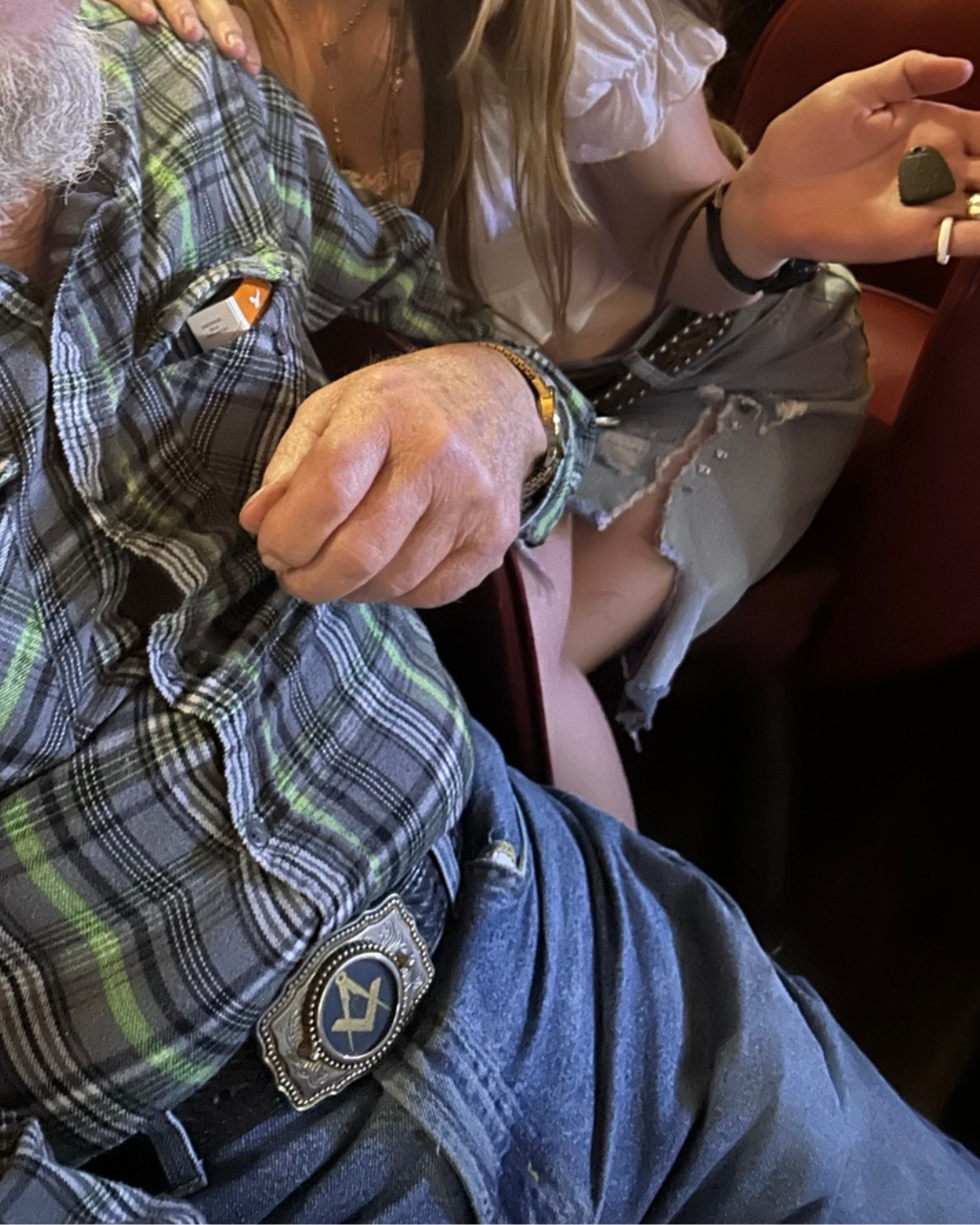
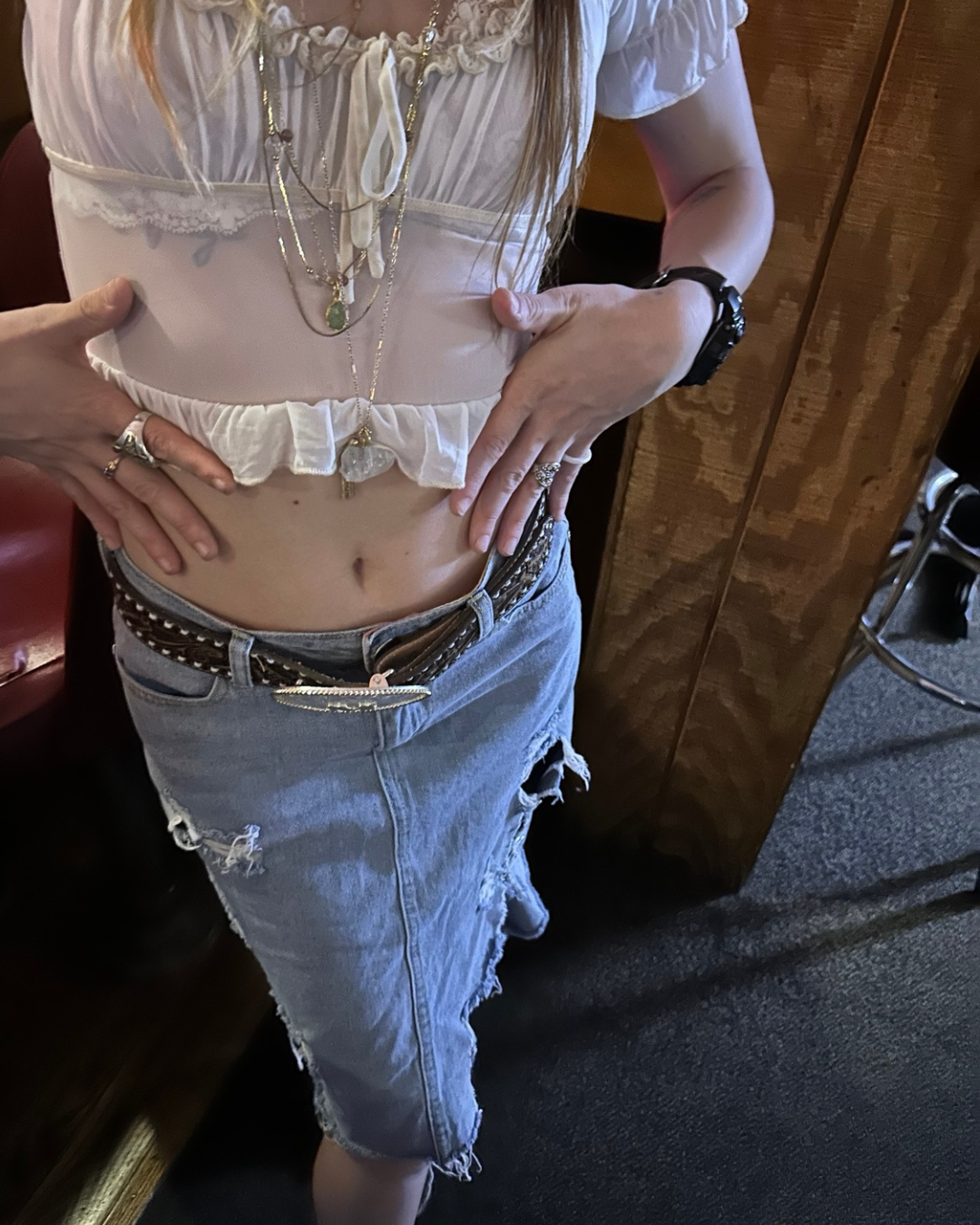
Last Saturday at the village inn, an 88-year-old Freemason showed me a carved stone with a Masonic seal on it, supposedly over 400 years old, and placed it in my hand like I had just unlocked a side quest. This is what I mean by medievalmaxxing. Not pretending to live in the past, but living close enough to elders, rooms, rituals, and local memory that history can still interrupt your night out.