
Ohio's Forgotten First Capital
A White Trash Testament to Growing Up in My Hometown...
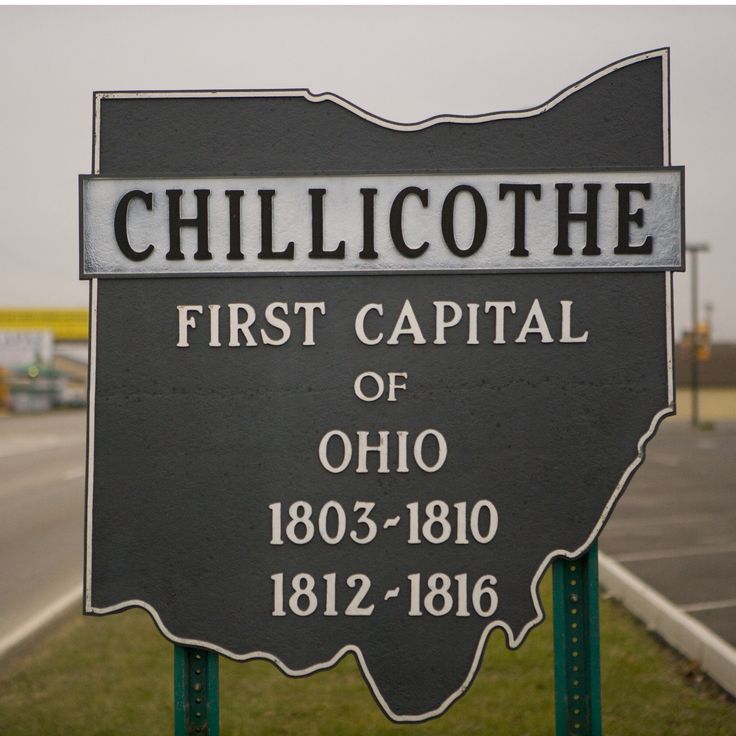
When I was in second grade, my teacher, Mrs. Bennett, told me, “You know, our city, Chillicothe, was the first capital of Ohio.”
Even in second grade, I wondered how we had lost that.
Or rather… Why was it taken?
Because by then, I had already learned what it felt like to be forgotten. To be passed over. To watch something important quietly decay while the rest of the world sped off down Route 23 North, never looking back.
Chillicothe was the first and third capital of Ohio. It was the first capital when we became a state in 1803, and for a time, it was the political heart of a nation just beginning to define itself. People used to come here with plans, with promise. Now they come to check on their dying relatives. To bury someone. To pick up Narcan.
To drive through and stop at one of our 4 McDonald’s on the way to somewhere “better.”
Or worse, to push their presidential political campaign.
No one here even really knows that we were built on sacred land. The Hopewell people, as we call them, they weren’t primitive savages. They were master astronomers, engineers, artists. They raised ceremonial earthworks here that align with the stars. Go to Serpent Mound just 40 miles away and see the way the celestial events line up with the land they raised. They knew this place mattered. They could feel it in the soil. But no one talks about that in school. They show us the mounds once or twice tell them that they’re filled with dead bodies and call it “history,” not inheritance. The majority of people here don’t know their real ancestry nor do they care to do the actual research to find out. They spit in a tube and sell their DNA to God knows who and proudly proclaim any European or Irish ancestry the test reveals.
You grow up here learning how to sit with ghosts and spirits.
Some of them have names. Some don’t. Some lived down the street, others just hung around the mounds, Elizabeth’s Grave, your grandfather’s 250 year old house, or the alley beside the Majestic Theatre and followed you home. Nobody ever tells you how close the spirit world runs to the surface in places like this. But you feel it. In your chest. In your sleep. In the way your grandmother lights a candle, paints her porch haint blue, flips her broom upside down when she wants her “company” to leave, or sleeps with her Bible on her bedside and won’t say why.
Grief is quiet here. Polite. Public but unspoken. You see it in the framed obituary on the living room wall. In the plastic flowers and crosses that never fade on the side of the highway. In the way everyone at the gas station already knows whose kid just died.
We don’t hold parades much here anymore. We hold benefits. Raffles. Candlelight vigils in the Walmart parking lot and on the river banks where the bodies of our loved ones were found. GoFundMe links with spelling errors and pictures of boys with soft eyes, bad tattoos, and hard lives. They die and we keep the food warm.
There’s a name for what happens here, but we don’t say it out loud.
We just call it “the way things are.”
Girls go missing. Mothers vanish.
Not always in a dramatic, headline-worthy way. Sometimes they just stop showing up. Stop replying. Stop being seen.
In 2014, if you made a new friend in the current capital, Columbus, and told them where you were from, they’d quickly say: “Oh, the place where all the women go missing?”
The Vanishing Women is what Investigation Discovery called it when they came to our town. A string of disappearances that couldn’t be explained, not really. Some were found. Most weren’t. And even the ones who were… It was already too late.
We all knew someone who knew someone or we know someone ourselves.
We all saw ourselves in the grainy photos on the news.
And every girl I grew up with started to walk a little faster. Buy mace or get her concealed carry license. Watch her drink. Carry her keys between her fingers in the Walmart parking lot.
This is a town that swallows women alive.
Or it teaches them how to disappear on purpose.
Either way, it makes you want to leave.
Even if you love it. Even if you feel guilty for wanting more.
Some of us ran to Florida. Some of us ran to God.
Some of us just run until we’re too tired to go any further, and we settle for barely surviving. We marry men we don’t like and we have children we can barely care for.
We get jobs that we hate. We do drugs, we drink and we smoke. We keep our heads down and suck it up because it’s just the way things are.
My best friend that I have kept since I was 13 got out.
She lives in Florida now. Key West, to be exact. A little island town that smells like rum and sunscreen and ocean air. She sends me pictures of herself in the sun, hair messy and salt-washed, smile soft but tired. She says it’s not easy, but it’s easier. More jobs. More opportunity. Better Pay. She doesn’t hear sirens every night and she doesn’t watch her friends disappear one by one into a system that was never designed to let us live.
She tells me people in the Keys act like it’s paradise. But she knows better. The whole world is designed to crush humans under the weight of it. But that also doesn’t mean you can’t do something to relieve the pressure.
“Come down here and live with me” she texted me once. Or twice. Or maybe ten times.
“You have got to get out of there.”
And I knew what she meant.
It’s hard to move forward when the reminders are there everyday. When you wake up and smell the sulfur and rot.
Long after the paper mill that kept us all alive so many years closed.
We carry it all with us — the funerals, the shame, the twisted faith and holy silence. The weight of every woman who didn’t get the chance to leave.
My best friends all moved south. I followed them. But I always came back.
Almost as if something calls you back to the land.
But I think it's time to get out of here...